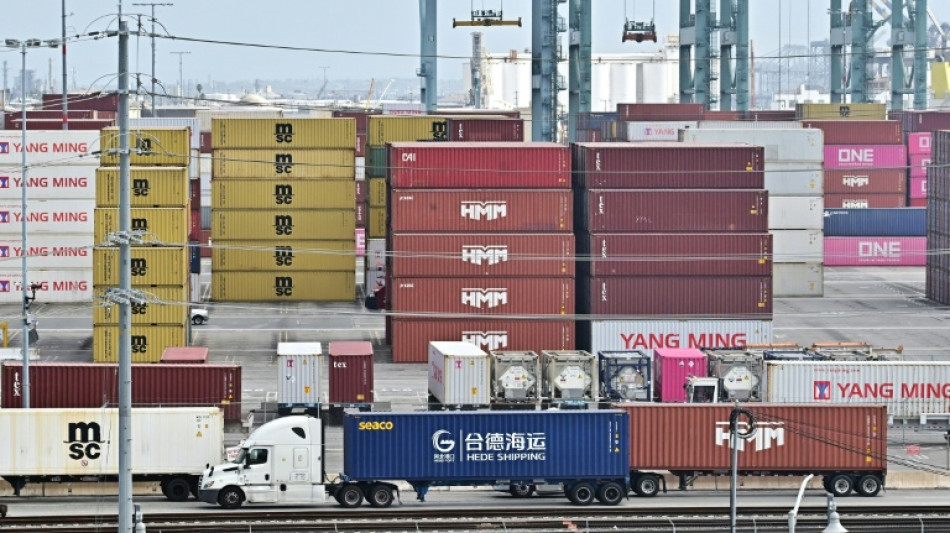
US wholesale prices jump 6.0% year-on-year in April, highest since 2022 / Photo: Frederic J. BROWN - AFP
Wholesale prices in the United States rose sharply in April, lifted by a surge in energy costs related to the Iran war, registering their highest 12-month increase in more than three years.
The Producer Price Index (PPI) rose 6.0 percent for the 12 months ending in April, the Bureau of Labor Statistics (BLS) said on Wednesday, the highest level since December 2022.
Month-on-month prices rose by 1.4 percent, sharply higher than expectations and at their highest level since March 2022.
The world's largest economy has been battling stubbornly high inflation since the Covid-19 pandemic, with US President Donald Trump's signature tariffs and the US-Israel war on Iran piling pressure on prices.
Iran's retaliation to US-Israeli strikes has seen the Middle East engulfed in violence, with Tehran virtually blocking the vital Strait of Hormuz waterway through which a fifth of global energy supplies pass.
"Over 40 percent of the April advance in prices for final demand goods can be attributed to a 15.6-percent increase in the index for gasoline," the BLS said.
The increase was sharply up from March, when year-on-year PPI inflation was 4.0 percent. That figure, too, was fuelled by higher energy prices due to the Iran war.
The numbers were released a day after US consumer inflation also came in at a three-year high, rising 3.8 percent year-on-year in April.
Trump has made tackling high prices a key part of his political agenda, but has been unable to bring prices significantly lower -- other than for some commodities -- since returning to power last year.
Inflation will be a major political issue for voters heading into midterm elections in November, where control of both houses of the US Congress will be up for grabs.
- Knock-on effects -
Analysts have warned that a short-lived spike in energy prices could lead to a temporary bout of inflation, but if the surge is more sustained it could lead to higher prices of other goods.
On Wednesday, Grace Zwemmer, US economist at Oxford Economics said there were signs in the PPI data that this process had begun.
"There are also signs that higher energy costs are beginning to bleed through to other goods and services, like transportation costs, which will keep producer price inflation lifted in the coming months," she wrote in a note.
The average price of a gallon of diesel in the United States is up around 50 percent since the start of the war, according to the AAA motor club.
Diesel is crucial not just to the road transport sector, but it also powers farm equipment and commercial shipping.
April's PPI data likely strengthens the case for the US Federal Reserve to hold rates steady for longer, said Ben Ayers, senior economist at Nationwide.
"With inflation still trending higher, we expect the hawkish wing of the FOMC to advocate for an extended pause in interest rates even with incoming Fed Chair Kevin Warsh likely to prefer to lower rates over time," he said.
G.Gerard--JdCdC