How airlines try to make sure pilots are safe to fly / Photo: STR - AFP
The apparent attack by the co-pilot on a flight to Israel, in which he stabbed his captain and tried to crash the plane, is a reminder that the cockpit is an extremely sensitive place in terms of aviation safety.
What can be done to stop an airline pilot from deliberately crashing a plane?
- What happened? -
As the flydubai Boeing 737 flew over northwestern Saudi Arabia en route from Dubai to Tel Aviv, the co-pilot suddenly attacked his captain, according to Israeli officials.
"During the flight, as they approached the country, one of the pilots stabbed the other pilot, and apparently tried to crash the plane with everyone on board," Prime Minister Benjamin Netanyahu said in a video message.
Officials have not said what was used as a weapon in the attack.
Some reports have suggested the plane's "crash axe" could have been used. This is a small axe kept in every plane cockpit for emergency situations.
Whatever the weapon and method used, the captain and passengers were able to subdue the attacker and the plane made an emergency landing at the Saudi airport of Tabuk.
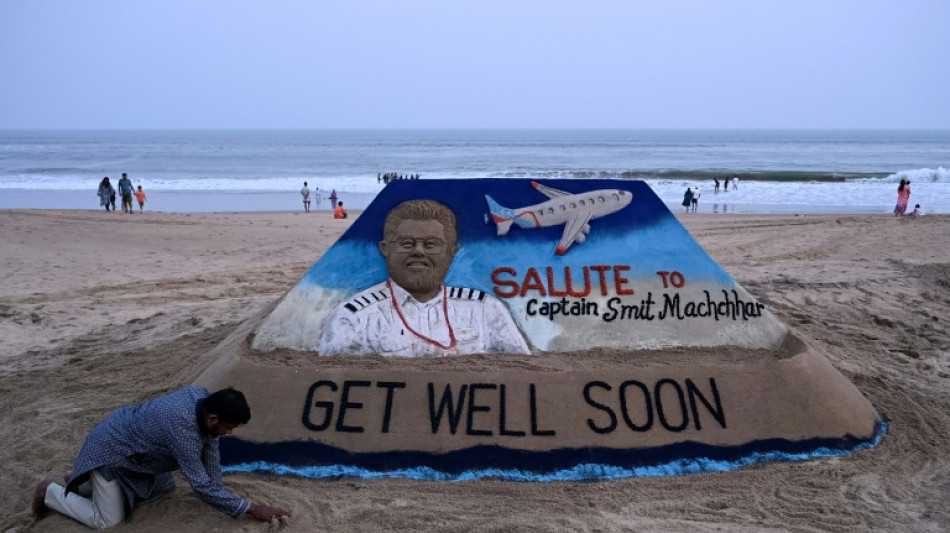
The captain, Indian national Smit Machchhar, was taken to hospital and is now out of danger.
The UAE has launched an investigation into a possible "terrorist" link, while Netanyahu said "another 9/11-style crash" had been prevented.
- Do pilots have to pass airport security? -
The security checks designed to stop passengers bringing anything on board that could threaten flight safety also apply to the crew, and pilots cannot get around them.
Depending on the size of the departure airport, they either go through the same security checkpoints as passengers, or through dedicated lanes.
This step is meant to detect any anomaly, such as a pilot who appears unusually nervous or intoxicated.
Carry-on luggage destined for the aircraft cabin is also X-rayed, and pilots pass through metal detectors.
Israel has been a high-risk destination since a spate of hijackings and attacks in the 1970s, which has led to heightened vigilance, something an airport as big and high-profile as Dubai is well used to.
- How secure is the cockpit? -
Access to the cockpit was tightened after the September 11 atrocities in the United States, where attackers were able to gain access and crash the planes.
If warned of a threat, pilots can now lock the door, which is always reinforced.
This time, however, the threat came from inside the cockpit itself, an extremely rare occurrence.
Early accounts suggest the captain managed to maintain control of access to the cockpit and alert his colleagues.
He was hailed as a “hero” by Indian Prime Minister Narendra Modi.
- How do airlines ensure their pilots are not dangerous? -
This is the most delicate issue, because it involves detecting a threat that may show no obvious warning signs.
The most emblematic case is the crash of a Germanwings plane in the French Alps in 2015, deliberately caused by a pilot.
The investigation revealed that the pilot, a 27-year-old German, suffered from depression and suicidal tendencies that his employer was not aware of.
The crash killed 150 people and raised awareness among airlines worldwide about the need for close monitoring of the mental health of crew members.
However, they communicate little about what they do on this front, for various reasons, including confidentiality.
In the flydubai case, many questions remain unanswered at this stage.
Israeli PM Netanyahu on Thursday told Fox News the pilot, reportedly an Omani national, had undergone "Islamist radical indoctrination", without elaborating.
M.Morel--JdCdC