Senegal to take back assets of phosphate giant ICS
/ Photo: PATRICK MEINHARDT - AFP/File
Senegal's government said on Friday it would take back all the assets of ICS -- one of Africa's biggest phosphate fertiliser producers -– ending the licence to control it held by Asian group Indorama Ventures.
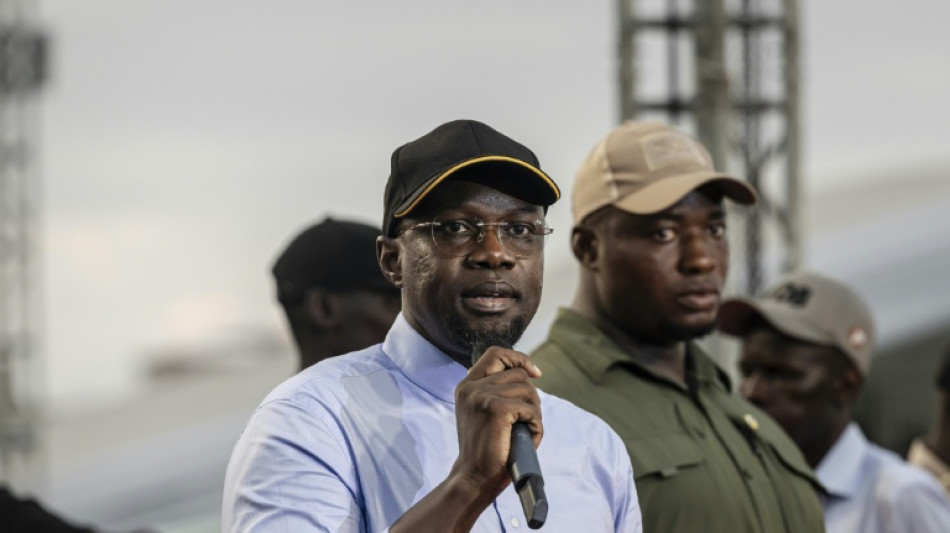
Prime Minister Ousmane Sonko issued a statement saying there had been major irregularities at ICS (Industries Chimiques du Senegal).
In September 2024, recently elected President Bassirou Diomaye Faye, a Sonko ally, announced a sweeping review of contracts and agreements signed with foreign partners.
This was an election promise made by PASTEF, the party to which Faye and Sonko belong, designed to bring more benefit to the country's 18 million people.
Senegal faces substantial debt, with the government accusing the previous administration of having concealed the extent of the budgetary situation.
Its leading industrial complex was taken over in 2014 by the Asian petrochemical group Indorama and employs thousands of people in the west African country.
Late on Thursday, Sonko told a press conference the government had renegotiated a string of contracts -– mainly with foreign firms -- in key sectors including mining, and withdrawn dozens of licences where companies had breached regulations.
He said on Friday the Senegalese state had been "short-changed... throughout the entire time" that Indorama, which specialises in phosphate mining and processing, had run ICS.
He put the "loss of revenue" at nearly 1,076 billion CFA francs ($1.88 billion).
Among the breaches, he cited "non-payment of taxes and duties, undue tax and customs benefits, and exemptions granted without legal basis".
"All of this amounts to substantial revenue shortfalls," he said, adding that the state was claiming more than 200 billion CFA francs from ICS, whose accounts had been frozen.
"We now want to take back all the assets and decide for ourselves what to do with our phosphates," the prime minister's statement said.
ICS was contacted by AFP but declined to comment.
- Renegotiated contracts -
Sonko said many contracts had been renegotiated in key sectors such as phosphates, cement and attapulgite clay -- a mineral used in the manufacturing, automotive and agriculture industries -- as well as in seawater desalination, electricity generation, infrastructure and property.
"We have made gains and savings," he said, without specifying amounts.
Sonko said the government had withdrawn 71 mining licences, including 14 for gold, from companies that had "failed to honour commitments" and would allocate them to "partners who respect" the contracts they sign.
It had also revoked concessions to exploit at least five oil blocks, he said, without naming the companies penalised.
Sonko said the review of the oil sector was ongoing and the government had identified a number of "unfair contracts" to "discuss in detail".
Senegal started producing oil in 2024 at the offshore GTA gas field that it shares with Mauritania.
GTA is operated by Britain's BP, US company Kosmos Energy and the national oil companies of Senegal and Mauritania, Petrosen and SMH respectively.
Due to rising fuel prices as a result of the war in the Middle East, Sonko said he had told Australian oil company Woodside -- which operates the offshore Sangomar field jointly with Petrosen -- to channel more oil to the domestic market.
"We do not know how long this situation will last," he said.
P.Perrin--JdCdC