Iran warns Gulf countries against helping US after UAE cuts trade ties / Photo: - - AFP
Iran's armed forces warned Gulf countries against assisting the US military on Wednesday, hours after the United Arab Emirates announced it was severing economic ties with Tehran following new attacks on shipping.
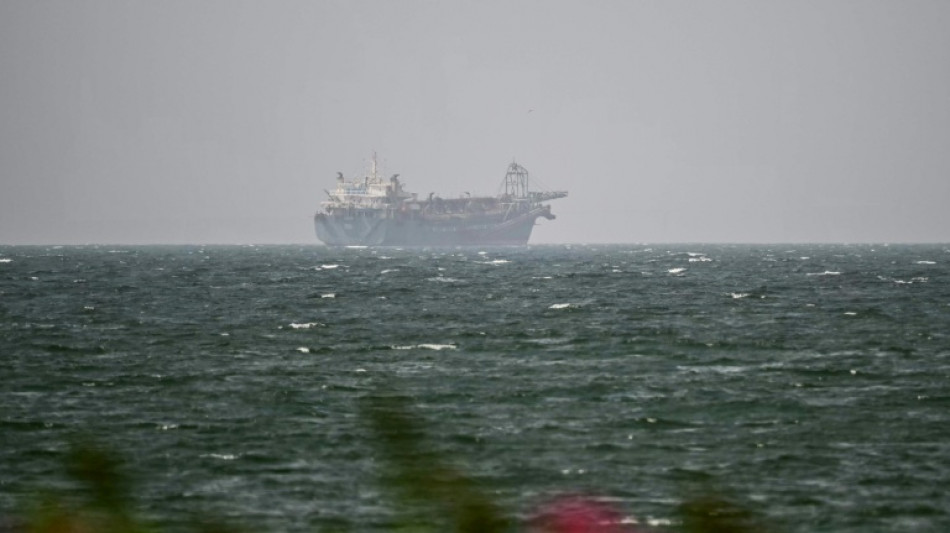
The Gulf is dotted with US military installations, including in the UAE, which said on Tuesday that Iran had fired two ballistic missiles at vessels off its coast.
Despite a recent lull in hostilities between the United States and Iran, the Strait of Hormuz -- which Tehran has blockaded -- remains a flashpoint, and attacks on commercial ships have continued.
A framework US-Iran deal aimed at reopening the vital trade corridor collapsed, and although both sides recently said messages were being exchanged, US President Donald Trump on Tuesday insisted talks were off, taunting Iran with a social media post depicting the strait as a "NEW U.S. Territory".
Iranian armed forces chief of staff Ali Abdollahi, according to the Mehr news agency, warned "any assistance or facilitation provided to the aggressor US military amounts to participation in the US military operation".
The conflict broke out on February 28 with US-Israeli attacks on the Islamic republic, which retaliated with missile and drone strikes across the region.
Since the start of the war, many Middle Eastern countries have said they would not allow the United States to use their territory as a launchpad for attacks, though Abdollahi cast doubt on those promises.
"It seems unlikely that such a large number of military aircraft, particularly refuelling aircraft, could be present at regional bases without knowledge of host countries," said Abdollahi, adding Gulf countries "should know that we are fully aware of the situation".
Media outlets have reported that Saudi Arabia, the United Arab Emirates, Kuwait and Bahrain have all hit targets in Iran in retaliation for Tehran's attacks on the Gulf, though the countries have mostly denied the reports.
- 'Halted until further notice' -
On Tuesday, the UAE announced that it was suspending all economic dealings with Iran.
"In light of regional escalations... all trade, commercial exchanges, and financial transactions with Iran have been halted until further notice," foreign ministry communications director Afra Al Hameli said.
Earlier in the day, Abu Dhabi accused Iran of firing two ballistic missiles towards the country, later clarifying the salvo was directed at shipping.
The neighbours across the Gulf share deep cultural and historical ties, and the UAE -- home to a sizable Iranian community -- had been a major trading partner for US-sanctioned Iran, at least before the war.
The UAE recalled its ambassador to Tehran early in the conflict and has shut Iran-linked schools and a hospital.
Tankers belonging to the UAE's state-owned oil company ADNOC have been repeatedly targeted in the past few weeks.
Top US diplomat Marco Rubio spoke to the UAE's national security adviser by phone on Tuesday to discuss "coordination to hold Iran and its terrorist proxies accountable for ongoing attacks", as well as the importance of free passage through Hormuz.
- 'No talks' -
Diplomatic efforts to settle the conflict have stalled, but Trump's envoy and son-in-law Jared Kushner had said on Monday that the United States and Iran were having "very positive and active conversations".
The president, however, denied that was the case on Tuesday, again insisting that the Strait of Hormuz was open, despite the Iranian blockade having throttled traffic for months.
"There are no talks or conversations going on, or scheduled, with the Islamic Republic of Iran. The Naval Blockade remains in full force and effect," Trump wrote on social media, referring to a US counter-blockade of Iranian ports.
Earlier Trump had posted a map showing the Strait of Hormuz as a "NEW U.S. Territory", echoing a previous threat to annex the conduit for oil and gas shipments.
The US has largely paused military operations, with US media reporting the war has put a strain on stockpiles of essential munitions, which Trump and the Pentagon have publicly denied.
With months of US military operations having failed to decisively end the conflict, Iranian officials have publicly struck a defiant tone in the face of ongoing threats from Washington.
Iran's parliament speaker and chief negotiator Mohammad Bagher Ghalibaf visited Iraq, saying the trip was "aimed at strengthening the new order in the region" and boosting cooperation "without foreign interference".
"Resistance in Iraq is also one of the elements of this country's power," he said, in an apparent reference to the pro-Iran armed groups operating inside the country.
L.Lefebvre--JdCdC