Argentina Abstains from UN Vote on Preventing Violence Against Women
Argentina has joined the United States and Russia in abstaining from a United Nations General Assembly vote on a resolution aimed at intensifying efforts to prevent and eliminate all forms of violence against women and girls. The decision marks another instance of Buenos Aires diverging from long-standing diplomatic positions under President Javier Milei’s administration.
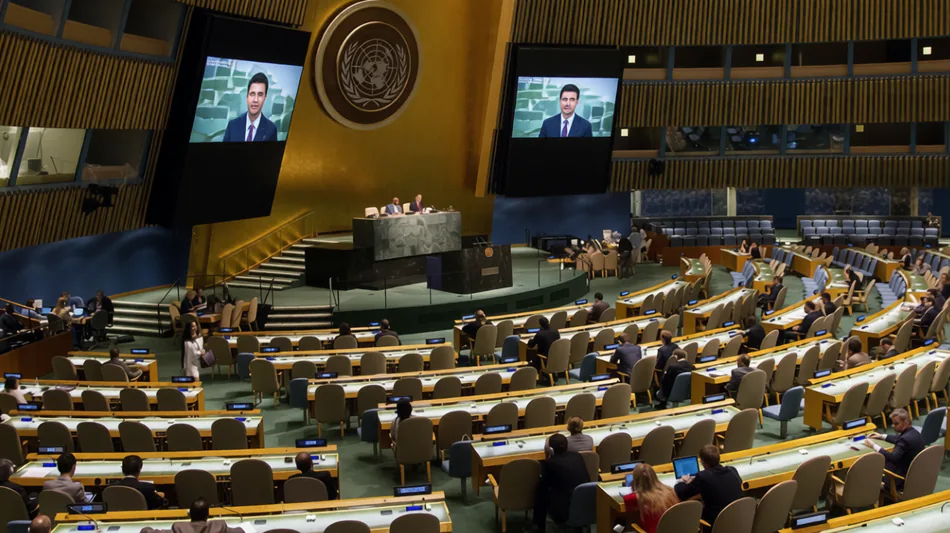
Argentina joined the United States and Russia in abstaining from a United Nations General Assembly vote on Tuesday regarding a resolution that calls for an intensification of efforts to prevent and eliminate all forms of violence against women and girls. The final tally recorded 175 votes in favor, with Cameroon, Belarus, and Burkina Faso also abstaining, while Somalia cast the sole negative vote.
The UN document characterizes gender-based murders, commonly referred to as femicides, as "the most severe form of sexual and gender-based violence." It notes that these crimes remain among the least punished due to systemic underreporting and legal gaps. The resolution further identifies historical and structural inequalities, unequal power relations, patriarchal values, gender stereotypes, and negative social norms as primary drivers of this violence.
The text also addresses the role of technology, stating that violence against women and girls is amplified through image-based abuse via AI-generated content and digital stalking, which serve as "documented warning signs for gender-related killings." Additionally, the resolution highlights the environmental crisis, noting that women and girls are disproportionately affected by climate change, environmental degradation, biodiversity loss, extreme weather events, and natural disasters due to existing structural inequalities.
Argentina’s abstention aligns with the foreign policy framework established by President Javier Milei, who has prioritized close alignment with the United States. Since taking office in December 2023, Milei has implemented a stringent austerity program that has significantly reduced funding for policies and programs designed to reduce gender-based violence. The president has also expressed skepticism regarding climate change initiatives, notably recalling the Argentine delegation from the COP29 UN Climate Change Conference in 2024.
This vote continues a pattern of Argentina diverging from its previous diplomatic stances at the United Nations. In September 2024, Argentina was the only country to vote against a draft resolution highlighting the commitment to achieve gender equality and empower all women and girls under the 2030 Agenda for Sustainable Development, an issue Milei has repeatedly rejected. Later that year, in November, Argentina was again the sole nation to reject a resolution on the Rights of Indigenous Peoples.
In October 2025, Argentina voted against a UN resolution calling for an end to the decades-long United States embargo on Cuba, marking the first time in its history it opposed such a measure. These shifts reflect a broader realignment of Argentine foreign policy under the current administration.
The abstention comes shortly after heightened scrutiny from international bodies regarding Argentina’s domestic policies. In early March 2026, the United Nations’ Committee on the Elimination of Discrimination Against Women (CEDAW) urged the Argentine state to resume policies against gender-based violence and discrimination that had been discontinued under the Milei administration.
The committee expressed deep concern over budgetary and operational cuts affecting key mechanisms, including the Acompañar (Support) Program. The program, which provides assistance to victims of gender violence, has seen its support period shortened and now requires a prior complaint from the victim. The 144 hotline for reporting abuse has also been impacted by reductions in funding, staffing, and accessibility, including services for women with disabilities.
CEDAW further warned about reduced access to Justice Centers and the elimination of the Ministry of Women, Gender, and Diversity, which it stated has led to institutional fragmentation. The committee urged the Argentine government to restore adequate funding, eliminate restrictive requirements, and guarantee accessible and inclusive services for victims.
M.Morin--JdCdC