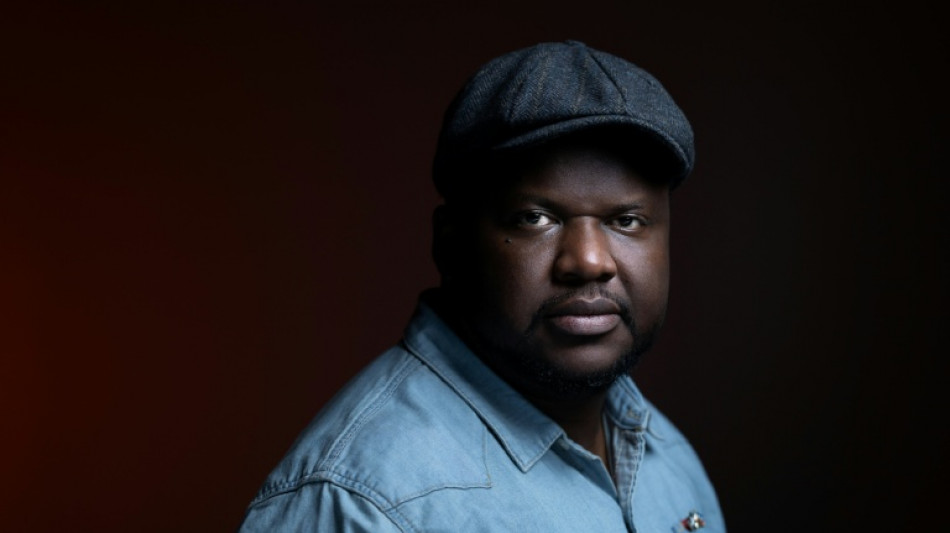
Novelist Thelyson Orelien denies AI use, admits plagiarism 'mistakes' / Photo: Joel Saget - AFP/File
A top-selling Haitian-Canadian writer who was accused of using AI to write his breakthrough debut novel denied the allegations Tuesday in his first detailed response to the scandal, while acknowleding past plagiarism "mistakes".
Thelyson Orelien, 38, was accused of using artificial intelligence to write his French-language novel about migration "C'etait ca ou mourir" ("It Was Either That Or Die"), which was set to be translated in more than 20 countries.
The book has become shrouded in suspicion and been withdrawn from the shortlist for France's top book prize, the Goncourt, after tests with AI detector Pangram indicated a 100-percent probability it contained computer-generated text.
"They say that 'C’etait ca ou mourir' was written by an artificial intelligence. That's slander and heresy," Orelien wrote in a statement sent exclusively to AFP.
"Here and there I did use tools for research, particularly for foreign idioms. But not a single sentence in this book was created by a machine, nor the meaning or the structure of a story that comes from my gut."
At the height of the media storm around his book last month, Orelien had vowed to talk when "things calm down" and promised to provide "proof" that the book had been written without recourse to AI.
In his statement, he said he had started writing the book in late 2017 "on the corner of a table" and he completed a first draft in 2019 of more than 300 pages -- several years before the advent of AI-enabled text generating services such as ChatGPT.
He has not made early drafts available, however, and his Canadian publisher Boreal has said it is unable to categorically confirm or deny the allegations of AI use.
- Apology -
The AI scandal surrounding Orelien is one of the biggest in the literary world, focusing attention on whether AI use is acceptable for novelists and leading to questions about the reliability of apps that claim to be able to detect text written by services such as ChatGPT or Claude.
Pangram is considered one of the most reliable and testing by AFP on an excerpt of "It Was Either That or Die" indicated a 100-percent probability that Orelien had used AI to produce it.
AFP ran excerpts through other AI detection tools and came up with a variety of results -- from it being "very likely" to have been written by a human to "100 percent" AI-generated.
Orelien also addressed evidence of plagiarism which emerged in media reports in the weeks after the AI claims, in particular over a newspaper column and a short story he wrote before the publication of his novel.
He admitted to "unacceptable mistakes" without mentioning any specific cases.
"I was just over 20, I was probably a little too impatient, without really understanding how much I still had to learn. I wanted to write, I was reading a lot... But admiring someone does not give you the right to take, to claim as mine texts that are not my own," he wrote.
"I deeply regret it and offer my heartfelt apologies without reservation."
Orelien fled his native Haiti following a 2010 earthquake that struck the Caribbean island, already ravaged by poverty and unrest.
J.Dupont--JdCdC