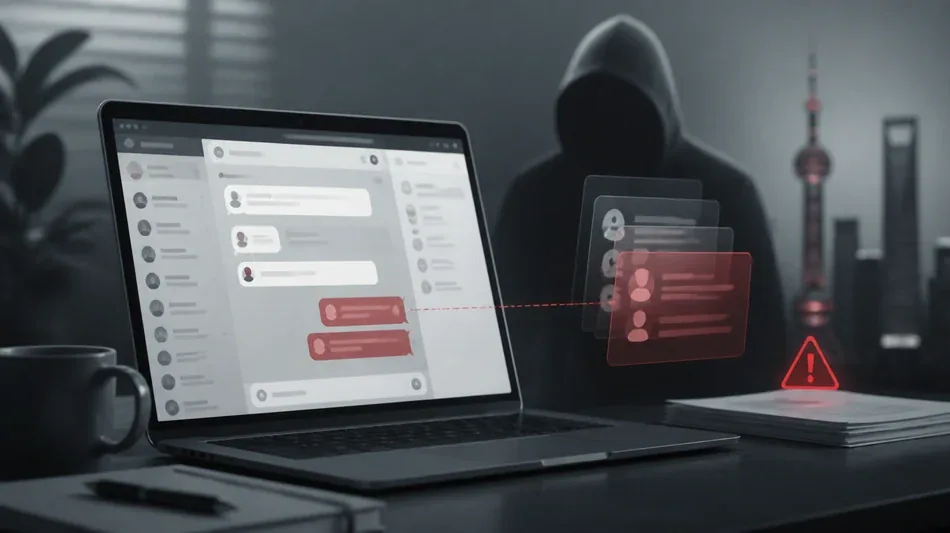
Scammers in China exploit Microsoft Teams and other workplace apps to target victims
Fraud victims in China say scammers are using trusted enterprise platforms such as Microsoft Teams, Webex and Zoho Cliq to move conversations into controlled accounts.
Scammers targeting people in China are increasingly using workplace communication platforms to make fraudulent approaches appear legitimate and to control access to victims' conversations. One Beijing resident identified by her surname Zhao said she lost more than $100,000 in May after a man she met on Xiaohongshu moved their conversation to Microsoft Teams, introduced a cryptocurrency investment scheme and persuaded her to borrow money from banks.Zhao said other victims later contacted her with similar accounts, reporting losses ranging from about $1,500 to $300,000. A recurring feature was that the scammers created the Teams credentials and gave them to the target. Because the fraudsters controlled the underlying organisation, they could later disable the account, leaving victims without access to chat histories that might be useful to police.An analysis by WIRED of 500 Teams reviews posted to Apple's Chinese App Store over the previous 18 months found that 30% explicitly complained about scammers, with the oldest scam-related review dating to 2022. Chinese local law-enforcement agencies have also published warnings that name Teams as a platform being used in fraud schemes.Microsoft said it investigates abuse reports, acts against accounts that violate its policies and continues to strengthen anti-fraud protections. In June, the company began showing a general scam warning banner to Teams users in China. Microsoft has also discontinued the personal version of Teams in the country, leaving the service available through enterprise accounts.Similar complaints have involved Cisco's Webex and Zoho Cliq. Since February 2025, 71% of more than 150 Webex reviews examined on Apple's Chinese App Store referred to scams. Cisco did not respond to a request for comment. Zoho said it had identified a limited number of fraudulent uses of Cliq and, as of August 27, had disabled online payments to Cliq in China, suspended accounts linked to the suspected scammer it identified and planned to discontinue the free version there.Victim accounts describe scammers posing as recruiters, prospective renters, romantic interests and overseas buyers. Enterprise tools can be attractive because they are widely trusted and, unlike some foreign messaging apps, are accessible in China. Features such as screen sharing and remote control can also create additional risks when users engage with unknown contacts.
M.Morel--JdCdC