BMW Unveils 2028 M3: First All-Electric M Car Delivers 838 hp and 3-Second Acceleration
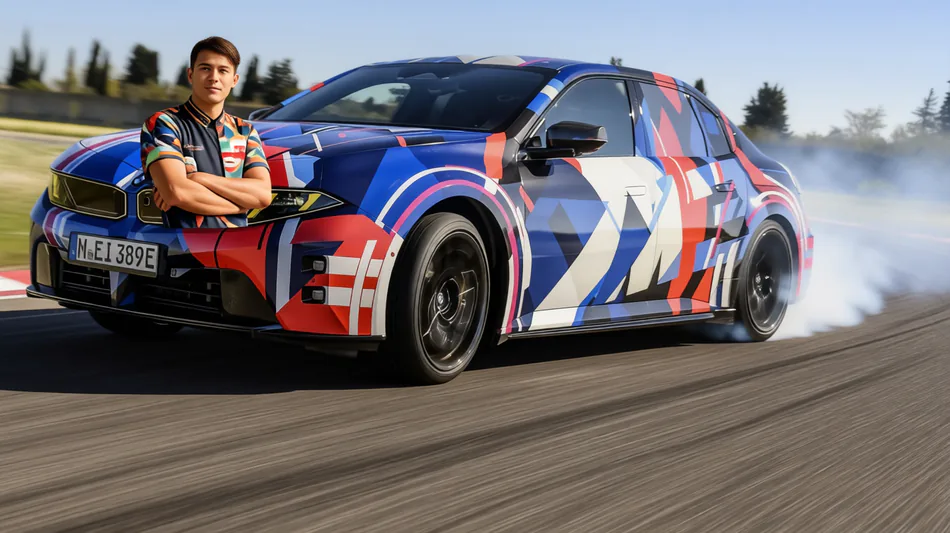
BMW has officially introduced the seventh-generation M3, marking the brand's entry into the all-electric performance sedan market with its first dedicated M car. The 2028 model features a quad-motor powertrain delivering 838 horsepower, enabling acceleration from zero to 100 km/h in approximately three seconds while maintaining the chassis rigidity and handling dynamics expected of the iconic M3 lineage.
BMW has unveiled the seventh-generation M3, a vehicle that marks a definitive shift in the automaker's high-performance history as its first all-electric model. The new sedan, scheduled for release in 2028, utilizes a quad-motor architecture to produce 838 horsepower and 885 pound-feet of torque, figures that position it as the most powerful iteration of the M3 nameplate to date.
The development of the electric M3 was overseen by Philipp Brunn, who serves as the Head of Project for the vehicle. Brunn emphasized that the engineering team approached the project from a "clean sheet of paper," focusing on balancing efficiency, range, and performance targets from the outset. He compared the calibration process to crafting a complex recipe, noting that simply increasing horsepower without adjusting other components would compromise the vehicle's balance.
"If you have enough salt in the recipe, it makes little sense to add more — it becomes too salty," Brunn explained. "To counter the saltiness mandates adding other spices to return the balance." He stated that the team determined the current power output was precisely calibrated for the chassis, avoiding the need for excessive force that could render the car undrivable on public roads.
The powertrain consists of four independent electric motors: two at the front and two at the rear. The front motors generate 643 horsepower and 398 pound-feet of torque, while the rear units produce 751 horsepower and 737 pound-feet. Brunn noted that the front motors were intentionally designed to be smaller and lighter than traditional configurations to improve front-to-rear weight distribution and preserve BMW's characteristic rear-drive bias.
The system allows for dynamic switching between all-wheel drive and rear-wheel drive modes. All-wheel drive is engaged to maximize traction, performance, and regenerative braking efficiency. Decoupling the front motors during normal driving enhances range and efficiency. The independent control of each motor enables precise torque vectoring, which acts as a primary layer of stability control by modulating wheel speed to counter oversteer or understeer without relying heavily on steering input.
To support the high-performance capabilities, BMW has reinforced the vehicle's chassis using its Neue Klasse platform. Brunn stated that the team added extensive reinforcing plates, cross-car braces, and strengthening struts to ensure maximum rigidity. This structural stiffness is critical for managing the forces generated by the powertrain and maintaining handling precision.
The suspension system features Adaptive M components designed to keep the vehicle stable during high-speed cornering. Brunn indicated that the chassis tuning prioritizes both "everyday drivability" and "race track performance" with equal intensity. The braking system utilizes large carbon-ceramic rotors and front calipers to handle repeated high-load scenarios without fading.
Inside the cabin, drivers can customize vehicle dynamics through M1 and M2 shortcut buttons on the steering wheel. Settings for the drivetrain, chassis, steering, and brakes can be adjusted across Comfort, Sport, and Sport Plus modes. The system also allows users to select the level of stability control intervention and adjust the artificial engine noise generated by the electric motors.
A new feature called M eDrive offers six distinct "Stages" of power delivery, which can be manipulated via steering-wheel-mounted paddle shifters. These stages simulate shifting sensations to provide feedback on powertrain response. Drivers can select Auto S for automatic management, Manual S for direct control, or D mode for standard electric vehicle characteristics.
The M3 is equipped with a 100-kilowatt-hour Gen6 battery pack featuring M-specific cells. BMW estimates the vehicle will achieve a range of up to 480 kilometers based on EPA testing standards. The car operates on an 800-volt architecture, enabling rapid charging capabilities. When connected to a 400-kW DC fast charger, the battery can replenish enough energy for 350 kilometers of driving in approximately ten minutes.
Regenerative braking plays a significant role in the vehicle's efficiency and track performance. Drivers can choose between Min, Mid, and Max regeneration settings and toggle the "creep" function. Brunn highlighted that during intense track sessions, regenerative braking can recover enough energy to effectively add one lap of range for every three laps driven.
For track use, the M3 includes pre-set functions that condition the vehicle for specific session lengths, provided the battery charge is at least 80 percent. These include Hot Lap mode for two-minute full-throttle runs, Short Run for eight minutes, and Long Run for 15 minutes. These presets optimize thermal management and power delivery to maintain peak performance.
The interior features new front bucket seats with extensive adjustability, including separate controls for the upper and lower base and backrest bolsters. Additional adjustments allow the seat base to sink deeper, providing enhanced support during high-G cornering maneuvers.
BMW has not yet released full specifications or pricing for the 2028 M3. The company plans to announce these details closer to the vehicle's launch date.
D.Dupuis--JdCdC